
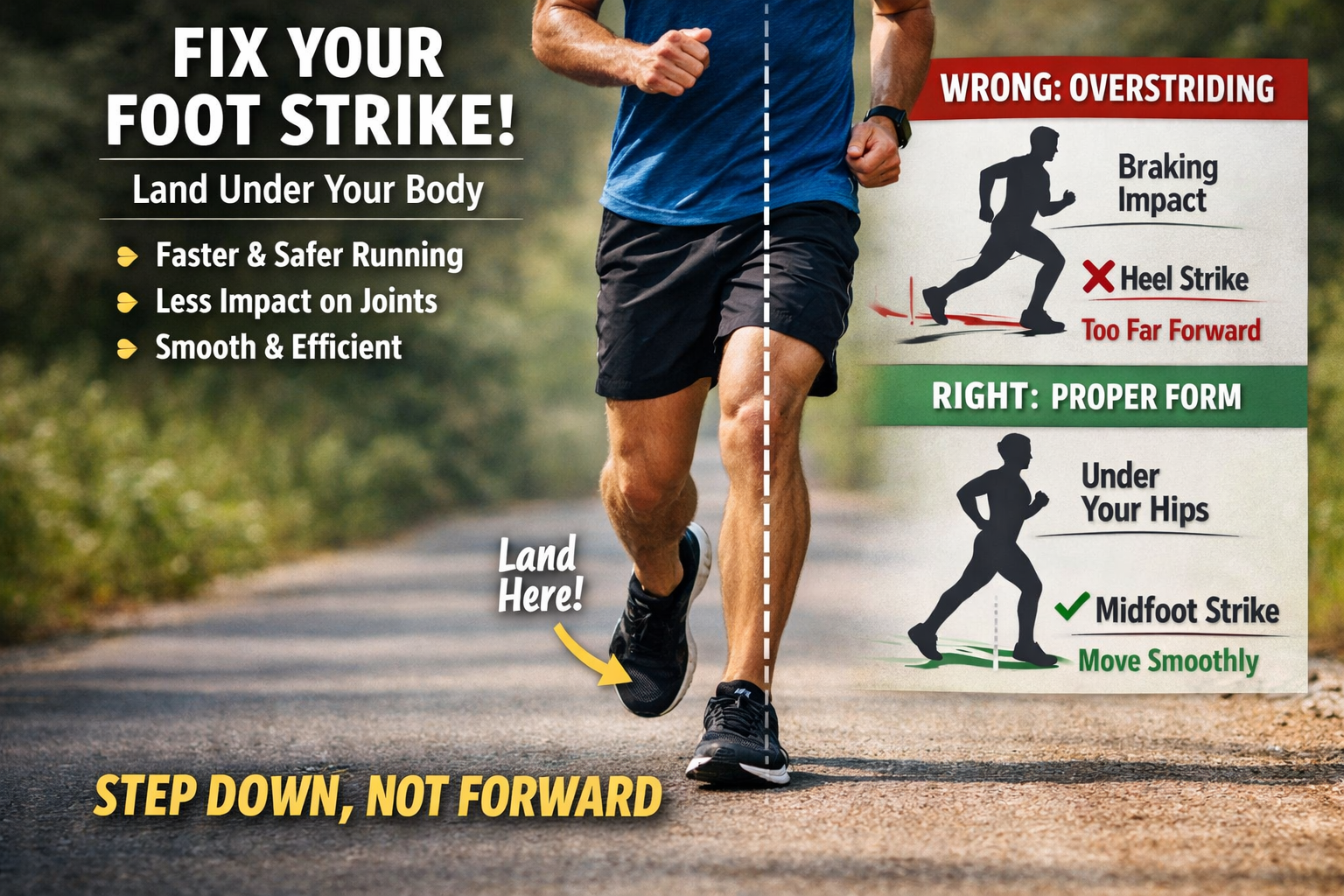
If there’s one small adjustment that can completely change how you run, it’s your foot strike. Most runners obsess over distance, pace, or shoes—but where and how your foot lands with each step quietly determines your speed, efficiency, and injury risk.
Let’s break it down.
What Is Foot Strike?
Foot strike refers to how your foot hits the ground when you run. It sounds simple, but it’s one of the most important elements of running mechanics.
There are three common patterns:
Heel strike – landing on the heel first
Midfoot strike – landing more flat, evenly distributed
Forefoot strike – landing on the ball of your foot
The goal isn’t to force a specific style—it’s to make sure your foot lands in the right position relative to your body.
The Golden Rule: Land Under Your Body
The most efficient runners all have one thing in common: 👉 Their foot lands directly under their hips, not out in front.
When your foot lands too far ahead (called overstriding), it acts like a brake:
Slows you down
Increases impact on joints
Wastes energy
Instead of moving smoothly forward, you’re basically stopping yourself with every step.
Why Overstriding Is a Problem
Overstriding is one of the biggest mistakes runners make—and most don’t even realize they’re doing it.
Here’s what happens:
Your leg reaches forward too far
Your heel hits the ground hard
Your knee and hips absorb more shock
Your momentum gets disrupted
Over time, this can lead to common injuries like:
Shin splints
Knee pain
Hip tightness
In simple terms: Overstriding = slower running + higher injury risk
What Good Foot Strike Feels Like
When your foot strike is efficient, running feels:
Light and springy
Quiet (less stomping)
Smooth and controlled
Instead of reaching forward, your foot simply drops under you as your body moves forward.
A good cue: “
Step down, not forward.” Midfoot vs Heel Strike — What Matters Most?
There’s a lot of debate about whether you should land midfoot or heel first.
Here’s the truth:
A light heel touch is completely fine
A midfoot strike is often more efficient
A hard, extended heel strike (from overstriding) is the real problem
So don’t stress about forcing your foot type. Focus on where your foot lands, not just how.
Quick Fixes to Improve Your Foot Strike
- Increase Cadence
Take shorter, quicker steps.
This naturally brings your foot closer under your body. - Run “Quiet”
Listen to your feet.
👉 Loud = too much impact
👉 Quiet = efficient - Slight Forward Lean
Lean slightly from your ankles (not your waist).
This helps your body move over your feet properly. - Don’t Reach
Avoid trying to “cover more ground” with each step.
Speed comes from rhythm, not overreaching. - Simple Drill You Can Try Today
Next time you run:
Focus on quick, light steps for 60 seconds
Imagine running over thin ice (stay soft and controlled)
Keep your steps directly under your hips
You’ll feel the difference almost immediately. - Final Thought
Great running isn’t about working harder—it’s about moving smarter.
Fix your foot strike, and you’ll:
Run faster with less effort
Reduce injury risk
Feel smoother and more in control Remember:
“Land under your body, keep it light, and let your stride flow.”
